Before the press releases, before the campaigns, before the strategy decks — there was a microphone. Dave Tragethon's career in communications began in a radio newsroom, writing and producing seven newscasts a day. Decades later, that instinct for a story, a soundbite, and a moment that lands — is still the engine behind everything he does.
The foundation that every subsequent role was built on.
Most marketing executives learn to talk to the media. Dave Tragethon was the media. His career began not in a boardroom, but in the KIUP/KRSJ newsroom in Durango, Colorado — a radio station owned by former President Gerald Ford and Leonard Firestone — where he rose to News Director before the age of 25.
Seven newscasts a day. Two stations. A beat that covered everything from municipal politics to mountain emergencies. It demanded economy of language, accuracy under pressure, and an ability to make complex issues immediately accessible to a broad public audience. Those are skills that don't come from a textbook — and they don't go away.
"That newsroom taught me that every story has a person at its center. Every message has an audience that deserves clarity, not spin."
His commercial production work earned recognition from the Colorado Broadcasting Association. And in 1980, under his news direction, the station was honored with the Associated Press Colorado News Station of the Year Award — one of the most competitive honors in regional broadcasting.
That credential followed him into every resort and hospitality role that came after. The ski industry got a communicator who already knew how newsrooms worked, what reporters needed, and how to frame a story before anyone else in the building had finished their coffee.
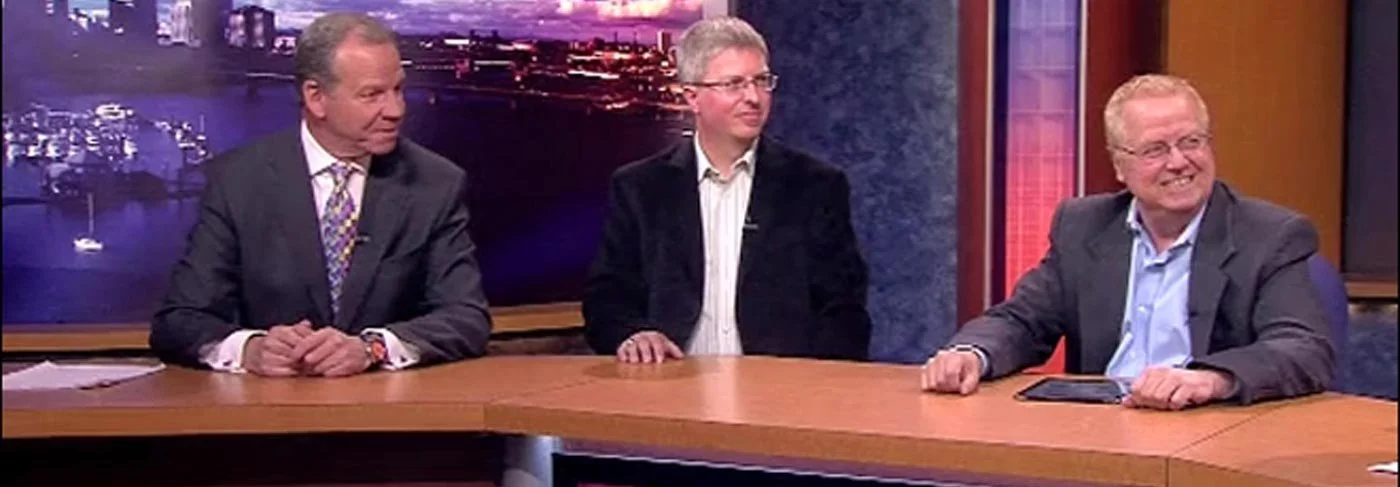
Portland TV news appearance — one of hundreds of broadcast media spots
Thirty years of being the face and voice of Mt. Hood Meadows.
From 1994 to the present, Dave Tragethon has been the principal spokesperson for one of the most recognized ski destinations in the Pacific Northwest. That role has meant showing up — consistently, credibly, and composedly — across hundreds of broadcast media appearances on television and radio news programs across Oregon and beyond.
The range of topics has been wide: early-season snowfall forecasts, late-season salvage strategies, environmental stewardship initiatives, climate change impacts on mountain recreation, and the kind of acute operational crises that test whether a spokesperson is prepared or improvising.
The discipline that makes a great spokesperson — brevity, clarity, staying on message, answering the question behind the question — isn't instinct. It's practice. And for Dave, it began in a newsroom, continued on stage, and was refined through decades of conversations with journalists who were well-equipped to find the gaps in unprepared answers.
"Reporters aren't your adversaries. They're your audience. When you understand that, you stop managing the interview and start leading it."
Beyond the broadcast appearances, he developed and implemented the broader communications architecture at Mt. Hood Meadows — the strategies, key performance indicators, and communications staff structure that ensured consistency whether he was behind the camera or not. His goal was never to be the only voice. It was to build a communications culture that could hold its own in any news cycle.

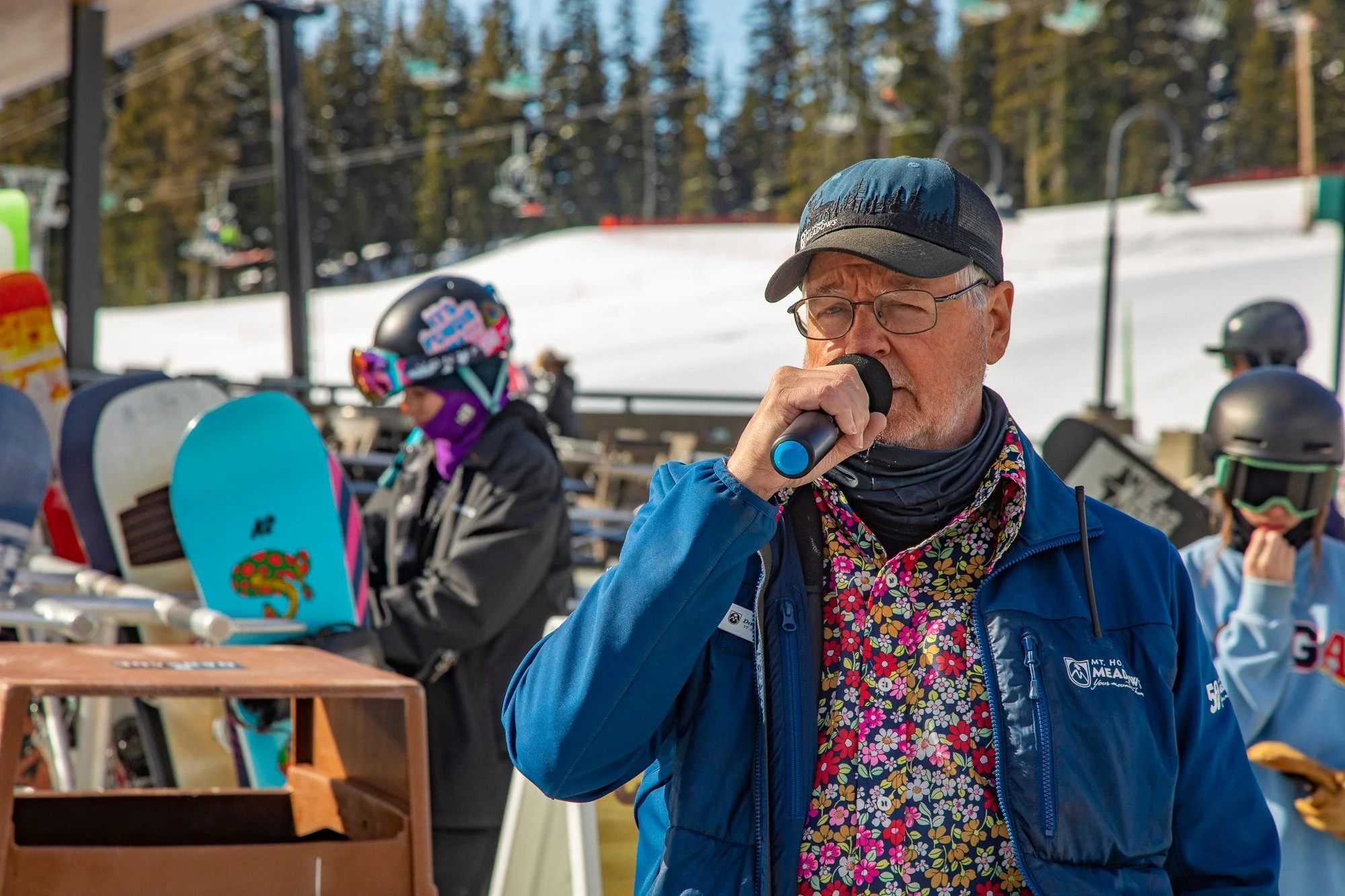
Announcing events on the mountain — a role held for nearly 30 years
Most executives approve the final cut. Dave made it.
There's a meaningful difference between being comfortable in front of a camera and understanding what it takes to build something worth watching. Dave Tragethon has operated on both sides of that line throughout his career — not as a hobbyist, but as the person responsible for the output.
Over the course of his tenure at Mt. Hood Meadows, he wrote, produced, directed, and voiced more than 100 radio and television commercials — dramatically reducing agency fees and production costs by more than $80,000 annually, while maintaining the quality and consistency of a resort brand that needed to look and sound premium in a competitive regional market.
That production instinct extended into digital. Dave built and web-mastered the original SkiHood.com in 1995 — the most visited winter travel and recreation site in Oregon — and oversaw three major platform revisions as the web matured. Today the site serves more than one million users annually and accounts for 80% of resort revenue, functioning as the primary ecommerce engine for advance sales.
"Every $8,000 in digital ad spend drove $800,000 in season pass revenue. That's not luck — that's knowing your audience and knowing how to talk to them."
His production toolkit spans the full spectrum of modern media: Final Cut Pro, Garage Band, Adobe Creative Suite, StreamYard live streaming, and podcast production — the same fluency that made him effective in a 1980s newsroom, updated for the tools of the current moment.
Sought-after authority at national conferences and industry convenings.
The same credibility that makes a strong spokesperson makes a compelling speaker. Dave Tragethon has appeared at national conventions, academic and scientific conferences, and industry leadership summits — bringing a practitioner's perspective to rooms full of theorists and a storyteller's clarity to rooms full of data.
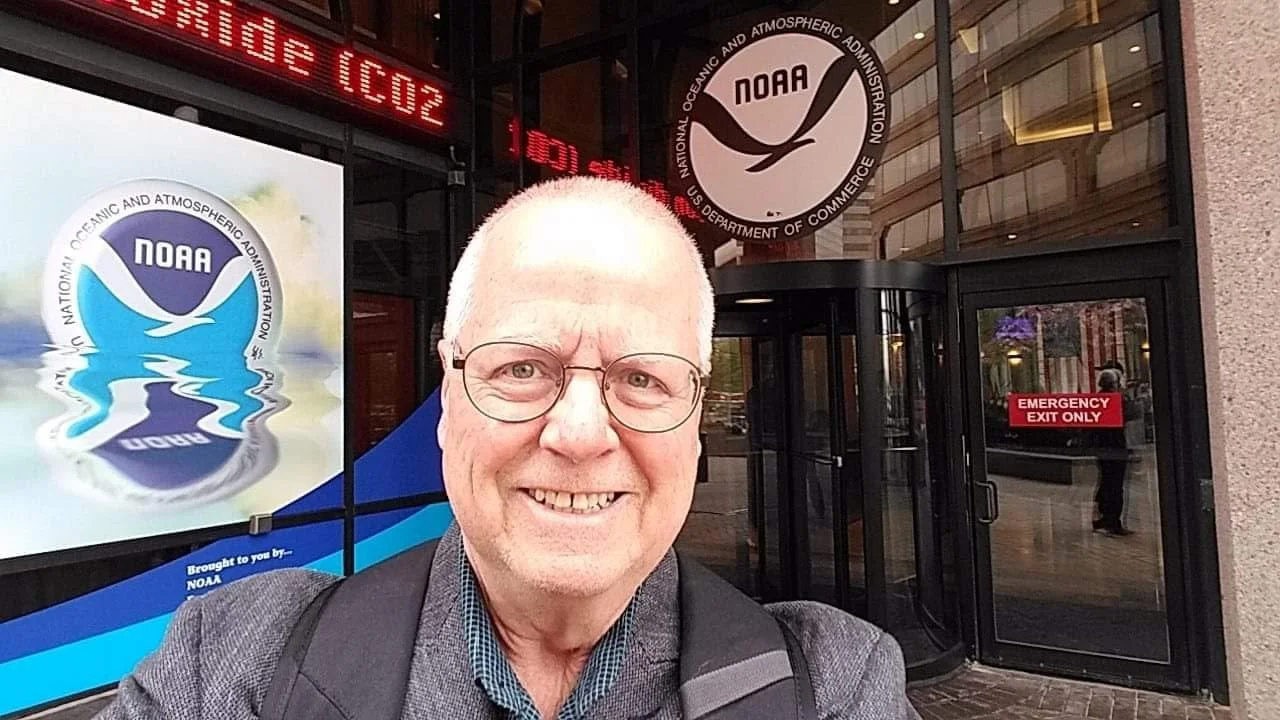
At NOAA headquarters for serving on a panel to grant snow monitoring program funding
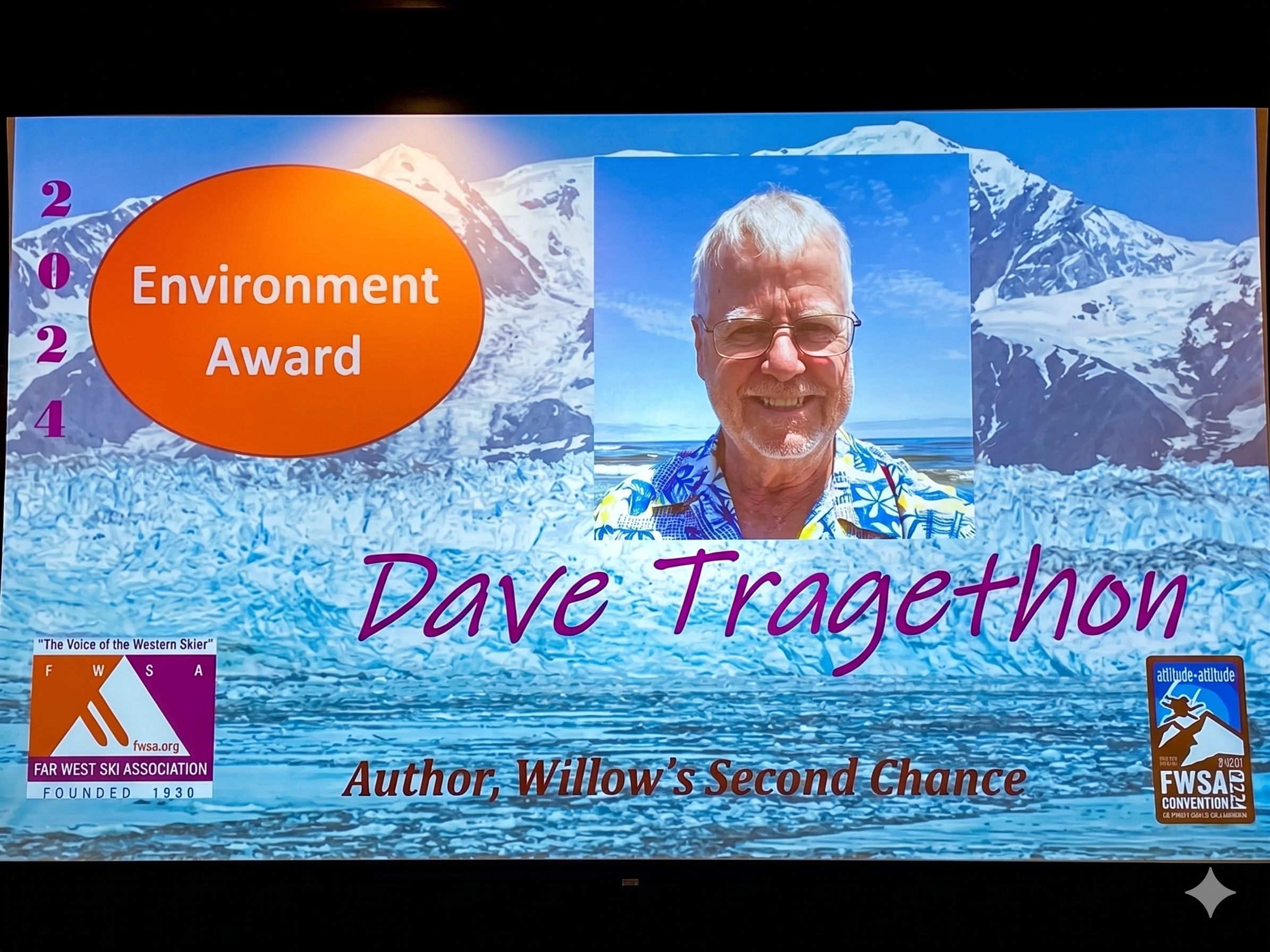
2024 Far West Ski Association Environment Award — recognizing years of environmental advocacy and communications leadership in the ski industry
The moments that reveal whether a communicator is real.
Crisis communications is not a skill you can claim on a resume. It's a skill you demonstrate when something goes wrong — when the cameras arrive before the talking points do, when the public is scared, and when the wrong word in the wrong moment costs more than any advertising budget could buy back.
Dave Tragethon has been in that room. In March 2020, as the ski industry faced a once-in-a-century disruption, he led the formation of the Covid Readiness Task Force at Mt. Hood Meadows — designing and communicating the safety protocols that would allow the resort to operate through the 2020/21 season. The outcome: zero workplace transmissions of Covid and the NSAA's Best Team Safety Program award.
But crisis communications at a mountain resort isn't limited to public health events. Every low-snow year, every lift malfunction, every weather event that closes terrain — these are communications moments. The test is whether the message that reaches guests is clear, accurate, empathetic, and fast. Over thirty years, Dave has built and led the systems that make that possible.
"In a crisis, the first communicator to be honest usually wins. The ones who manage perception instead of sharing information — they're the ones who need crisis communications the second time."
Available for consulting, speaking engagements, and senior communications leadership roles.
Get in Touch