We spend a lot of time in the ski industry talking about what people do on the mountain.
They ski powder. Carve groomers. Learn to snowboard. Ride lifts, explore terrain, challenge themselves and share memorable days with friends and family.
But perhaps we should spend more time talking about what those experiences do for people.
That thought has been on my mind through my work with the National Ski Areas Association Growth Committee, where we have been discussing how the industry can attract, engage and retain the next generation of skiers and snowboarders.
Two recent articles added an interesting dimension to that conversation.
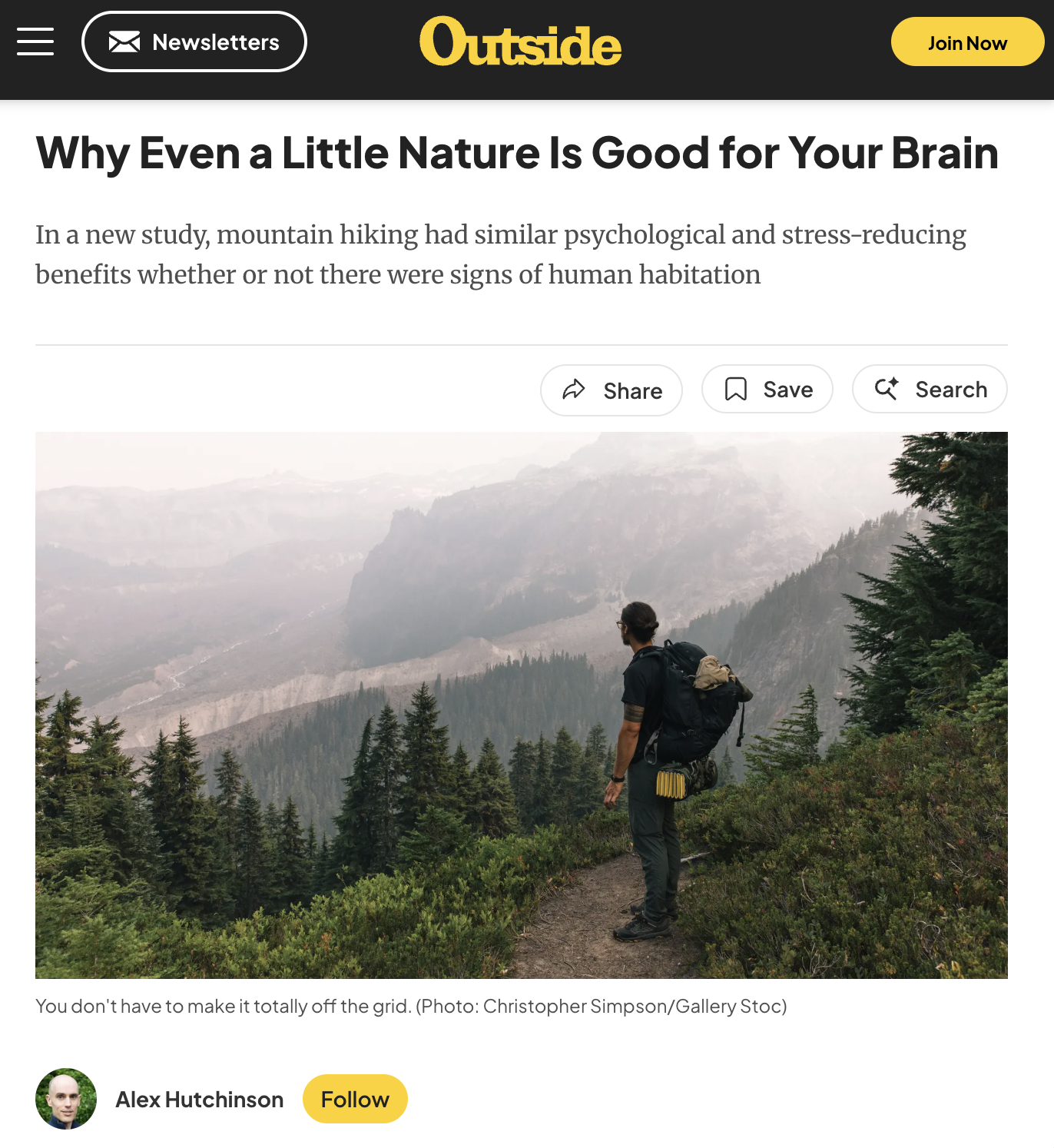
Outside recently examined research into the psychological benefits of spending time in mountain environments. An Austrian study compared hiking in relatively natural mountain settings with hiking in developed mountain environments where ski lifts, roads and other infrastructure were visible.
Participants experienced similar psychological benefits in both.
That finding matters for an industry whose mountains are, by definition, developed recreation environments. People apparently do not need untouched wilderness to benefit from being active outside and immersed in nature.
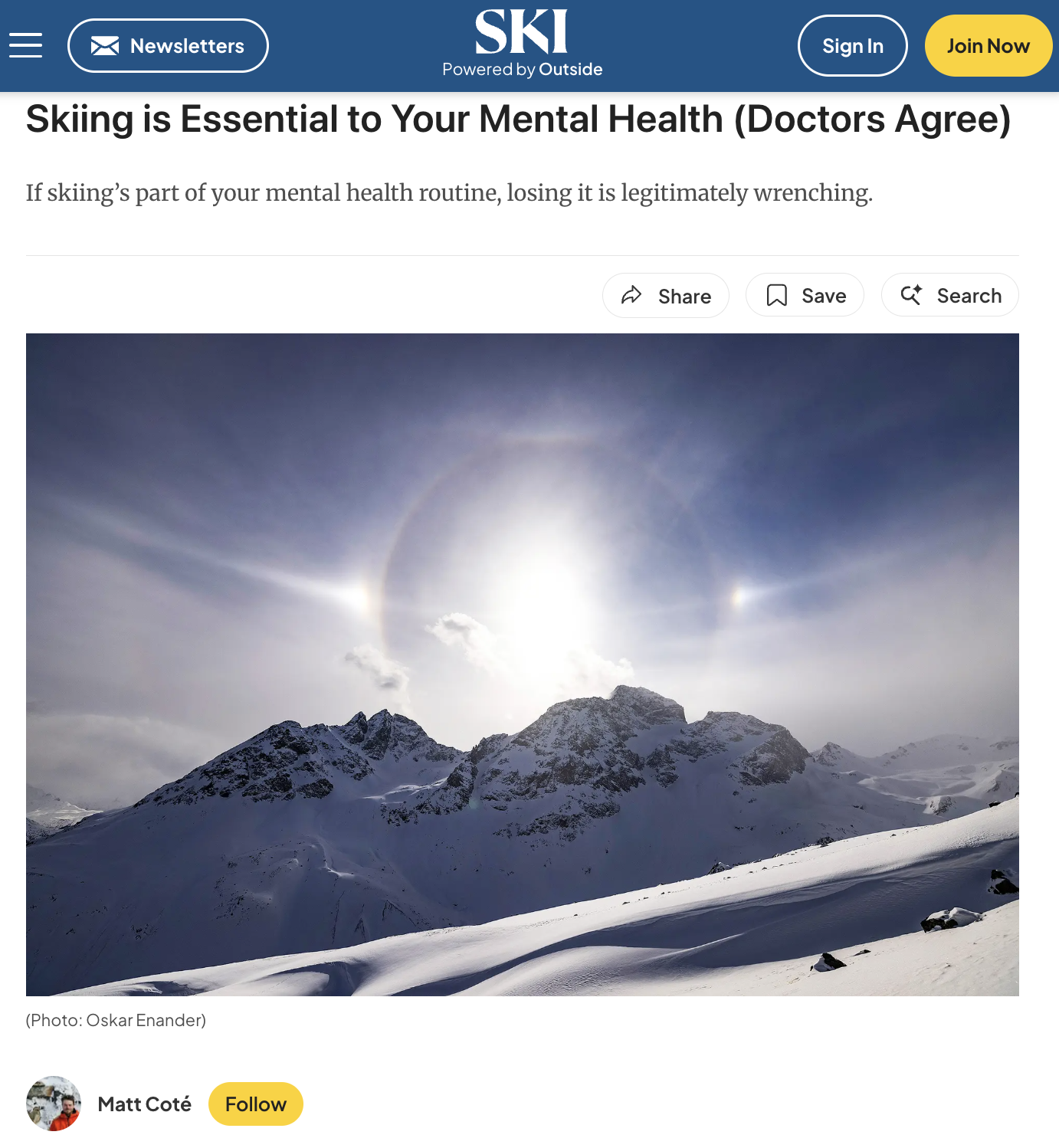
A second article from SKI explored the relationship between skiing and mental well-being. Clinical counselor John Coleman describes movement, community and connection as fundamental human needs that skiing and snowboarding can help fulfill.
That resonates with something many lifelong skiers and riders already understand.
A day on the mountain is physical activity, but it is rarely just exercise.
It is movement combined with nature. Challenge combined with accomplishment. Time with friends and family. Learning something difficult and experiencing the satisfaction of getting better.
And increasingly, it may provide something many of us need more of: time when our attention is focused on what is immediately in front of us rather than the screen in our hand.
A Broader Definition of Well-Being
We should be careful about positioning skiing or snowboarding as a specific mental-health treatment. Much of the strongest research relates more broadly to physical activity, nature and social connection rather than downhill snowsports specifically.
But that does not weaken the story.
The value proposition could be expressed simply:
Physical activity + nature + friends and family + challenge + accomplishment + freedom from screens.
Skiing and snowboarding bring those elements together in a way relatively few activities do.
That also connects with another important concept in the ski industry's growth work: belonging.
Enjoyment and progress matter, but so do the people we participate with and the communities we become part of.
The chairlift conversation. The group of kids who meet every Saturday. Friends who have skied together for decades. The teenager who stops thinking of snowboarding as something they tried and starts saying, "I'm a snowboarder."
Those connections may be just as important to long-term participation as technique.
The “Why” and the “How”
This is where well-being intersects with growth.
Well-being and connection are part of the “why.” They explain the personal value someone can receive from skiing and snowboarding.
Access, affordability, instruction and memorable experiences are the “how.” They determine whether someone gets the opportunity to experience that value in the first place.
There is little benefit in telling people how meaningful skiing can be if the first experience is too expensive, confusing, intimidating or geographically inaccessible.
And getting someone through the door once is not enough.
A successful first experience should create more than basic competency. It should create confidence, accomplishment and an emotional connection to the activity.
The progression might look like this:
Low-friction access → early success → confidence → memorable experience → social belonging → identity → return.
When that happens, skiing becomes more than a recreational purchase.
It becomes something people value.
An Opportunity With Youth and Families
This may be particularly relevant to the audiences the industry most needs to engage.
Young people are growing up surrounded by screens and intense competition for their attention. Families are looking for experiences they can genuinely share. Young adults are looking for recreation, community and ways to disconnect from digital life.
Skiing and snowboarding have something meaningful to offer each of them.
Historically, much of ski-area marketing has understandably focused on the product: snow, terrain, lifts, scenery, adventure and excitement.
Those things still matter.
But perhaps the deeper invitation is:
Come outside. Move. Challenge yourself. Be with people you care about. Learn something. Feel connected.
As the ski industry thinks seriously about growing participation, mental well-being, social connection and time in nature deserve an important place in the conversation.
Not because skiing is a prescription.
And not because a wellness campaign alone will create millions of new skiers and snowboarders.
Growth still requires the hard work of improving affordability, access, instruction, geographic reach and the first-time experience.
Those things answer the question of how people participate.
We should also be able to answer why participating is worth it.
For those of us who have spent much of our lives on snow, the answer may seem obvious.
For millions of people who have never experienced it, perhaps it isn't.
Are we doing enough to communicate the personal value of skiing and snowboarding to people who have never experienced it?
The answer could become an important part of how we invite the next generation outside.
And remember, now more than ever…